Institute for Justice and Democracy in Haiti
Haiti’s finance minister resigns
April 10, 2013
Haiti’s minister of finance and economy has resigned, effective immediately.
Marie Carmelle Jean-Marie sent her resignation letter to Prime Minister Laurent Lamothe early Wednesday morning, saying that she was leaving her role as the country’s economy chief. She has been in the job for about a year.
Nicknamed “the Iron Lady,” Jean-Marie worked in Cuba for eight years before giving up her residency there to return to Haiti in 2010. She is considered by many in Haiti and in the international community as one of the more credible and competent members of President Michel Martelly’s administration.
But her efforts to bring transparency to Haiti’s finances, initiate a large-scale reform of the management of the country’s finances and put Haiti on a path to macro-economic stability haven’t been easy.
Billions of dollars in promised pledges by the international community are still outstanding. Efforts to pass money laundering legislation have been stalled in parliament, threatening to make financial transactions between Haiti and U.S. banks much more difficult. Also, questions about the lack of transparency in government spending and social programs linger.
The most recent issue creating a stir among donors is a decision by the administration to issue $432 million in no-bid contracts after Hurricane Sandy last year. Lamothe has defended the decision.
Sources close to the minister told The Miami Herald that while she didn’t go into specifics about her reasons for quitting, she does point out that she no longer feels she has the support of her colleagues in her effort to provide responsible management of Haiti’s finances and economy.
Click HERE to read the original article.
Amnesty International Report’s, “Nowhere to Go” – Forced Evictions in Haiti’s Displacement Camps
April 24, 2013, Amnesty International
Three years after the devastating earthquake in Haiti, tens of thousands of people are still living in insecure and inadequate shelters. This report shows how Haiti’s post-quake reconstruction is failing to protect and fulfil the right to adequate housing. Amnesty International has documented a pattern of forced evictions of internally displaced families. This has involved the mass removals without notice. Forced evictions violate the rights of internally displaced people at all stages: threats prior to the eviction, violence during the eviction, and homelessness following the eviction.
Click HERE to see the Original Article
Click HERE to see the French Version
Haitian Human Rights Lawyer Mario Joseph Named Finalist for 2013 Martin Ennals Award
Contact:
Mario Joseph, Av., BAI, mario@ijdh.org; +509-3701-9879
Brian Concannon, Jr., Esq., IJDH, brian@ijdh.org; +1-541 263 0029
April 24, 2013, Boston, MA — The jury for the Martin Ennals Award for Human Rights Defenders, one of the most prestigious human rights awards in the world, has selected Haitian lawyer Mario Joseph as one of three finalists. The Martin Ennals Award is awarded annually to an individual who has demonstrated an exceptional record of combating human rights violations by courageous and innovative means, and whose exemplary work has put them at great personal risk.
As Managing Attorney of the Bureau des Avocats Internationaux, Haiti’s leading public interest law firm, Mr. Joseph has fought bravely and successfully for victims of human rights abuses in a range of politically sensitive cases. Mr. Joseph has pioneered a “victim-centered approach”, combining traditional legal representation with capacity building and political strategies that advance the interests of the clients’ organizations and communities and maximize cases’ positive impact on broader Haitian society.
“The Martin Ennals honor not only recognizes Mario’s historic contributions to justice in Haiti, it also validates his insistence that poor people have the right and ability to participate as equals in the fight for justice,” said Paul Farmer, physician and co-founder of Partners In Health, a non-profit healthcare organization dedicated to providing “a preferential option for the poor”, including in Haiti.
Mr. Joseph advocates zealously on behalf of political prisoners and dissidents, survivors of sexual violence, victims of former Haitian dictator Jean-Claude “Baby Doc” Duvalier, and families seeking reparations from the United Nations for causing a deadly cholera epidemic.
“Mario is a driving force for justice for the tens of thousands who suffered grave abuses under one of the Americas’ worst dictators. The Martin Ennals recognition signals to Haiti and to the world that the human rights community is watching and supporting Duvalier’s historic prosecution,” said Pamela Merchant, Executive Director of the Center for Justice & Accountability, an international human rights organization dedicated to deterring torture and other severe human rights abuses around the world.
“Mario shows us all what true commitment to human rights looks like: a relentless insistence that all people’s rights be respected, no matter the context. Mario’s effort to seek accountability from the UN for bringing cholera to Haiti that has killed 8,000 people exemplifies his commitment,” said Vince Warren, Executive Director of the Center for Constitutional Rights (CCR), a legal and educational organization dedicated to advancing and defending the rights guaranteed by the United States Constitution and the Universal Declaration of Human Rights.
In his nineteen years as a human rights lawyer, Mr. Joseph has received countless death threats, has witnessed the arrest and murder of many of his friends, colleagues and clients who spoke out against repression, and watched his country crumble in the January 2010 earthquake.
In 2012, intimidation and harassment against Mr. Joseph and his work intensified, and Mr. Joseph and the BAI became the target of unwarranted searches, public threats by government agents, and frequent anonymous death threats. In September 2012, the former Chief Prosecutor of Port-au-Prince reported that he was fired after refusing to carry out an illegal order to arrest Mr. Joseph.
“Receiving this prestigious recognition will provide Mario with much-needed protection from threats and harassment, and ensure that he can continue his work,” said Brian Concannon, Jr., Esq., Director of the Institute for Justice & Democracy in Haiti, BAI’s sister organization in the United States.
The Martin Ennals Award is known as “the award of the human rights movement” because its jury consists of representatives of ten of the world’s leading human rights organizations, including Amnesty International, Front Line, German Diakonie, Human Rights First, Human Rights Watch, HURIDOCS, International Commission of Jurists, International Federation for Human Rights, International Service for Human Rights and World Organisation Against Torture.
Also nominated for the 2013 award are Mona Seif of Egypt and Joint Mobile Group working in Chechnya, Russia. The award recipient will be selected among the three and announced at an awards ceremony in Geneva in October.
Mario Joseph Biography
Mario Joseph Biographie (French Version)
Summary of the Martin Ennals Award
Summary of the Martin Ennals Award (French Version)
Press Announcement of Final Nominees 2013
Press Announcement of Final Nominees 2013 (French Version)
Video of Mario Joseph’s Nomination
Click HERE for more information on the Martin Ennals Award.
  Film Screening with the Irish
Film Screening with the Irish International Immigrant Center Boston, Irish International Immigrant Center
WHEN Tuesday, April 23
WHERE Irish International Immigrant Center,
100 Franklin St., Lower level 1, Boston
IJDH Development & Operations Manager Betsey Chace will be speaking on a panel Friday, April 23 from 5:30-8:30. Please join us for light refreshments, film screening and panel discussion.
Panelists: Karen Ansara | Rishi Rattan | Betsey Chace | Rev. Eno Mondesir
Moderator: Leon David
April 13-14, 2013- New Haven, Conneticut
Global Health & Innovation Conference 2013
Presented by Unite For Sight, 10th Annual Conference
Saturday, April 13 – Sunday, April 14, 2013
IJDH Director Brian Concannon will be one of the speakers: “Enforcing the Right to Health of Haiti’s Cholera Victims”
http://www.uniteforsight.org/conference
“A Meeting of Minds”–CNN
The Global Health & Innovation Conference is the world’s largest global health conference and social entrepreneurship conference. This must-attend, thought-leading conference annually convenes more than 2,200 leaders, changemakers, students, and professionals from all fields of global health, international development, and social entrepreneurship. The registration rate increases after March 20.
Time for Caribbean Leadership to Speak Up on Haiti
April 11, 2013, NACLA
Kevin Edmonds
In the most trying of times, it is often said that it becomes much easier to tell real friends from the fake. Since the announcement by United Nations General Secretary Ban Ki Moon, claiming that the U.N. has legal immunity when it comes to their role in introducing cholera to the country, the Haitian people are currently learning that, outside of Cuba, even supportive words are hard to come by within the rest of the Caribbean Community (CARICOM).
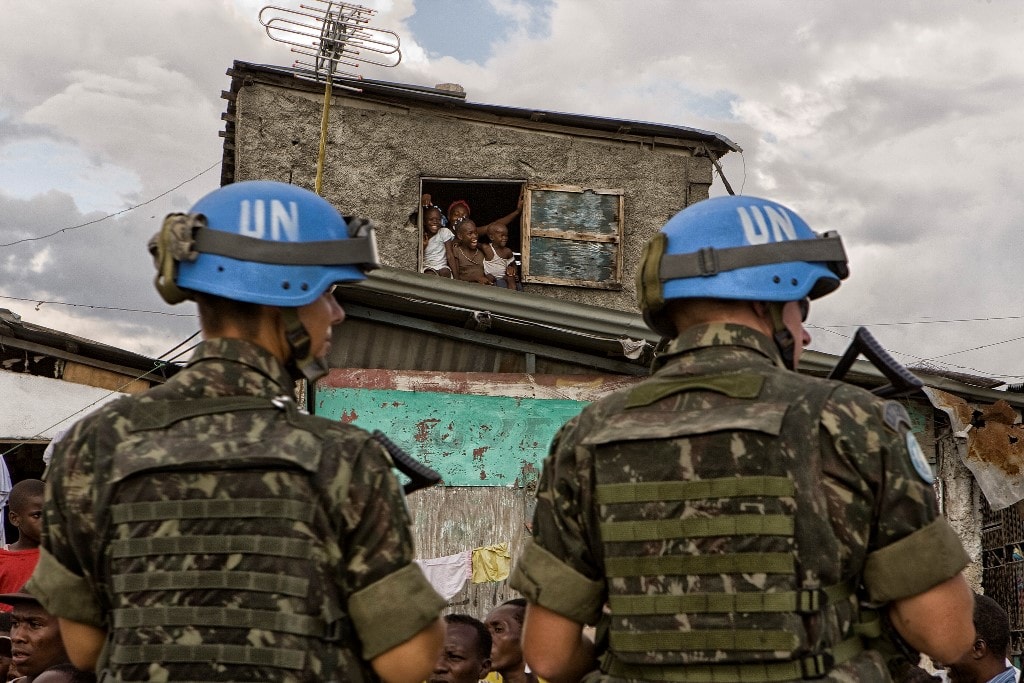
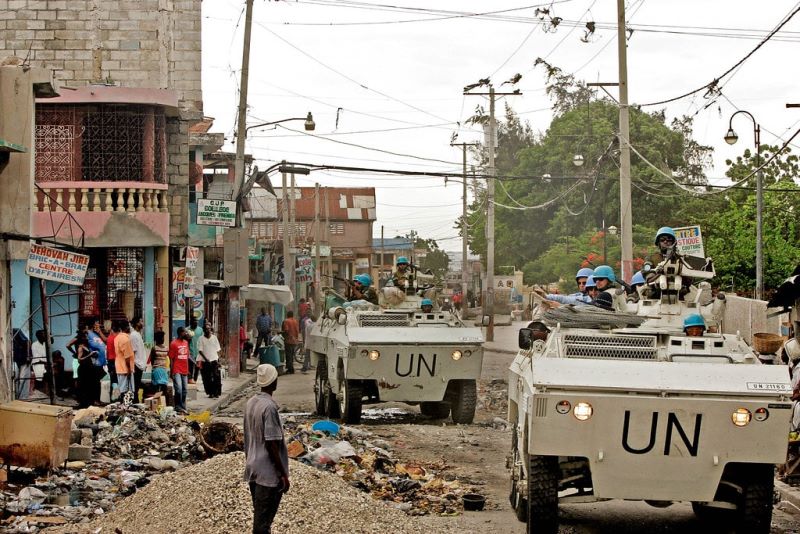
By now it has become widely accepted that the U.N. was responsible for introducing cholera into Haiti during October 2010 via negligent screening protocols and waste management at their base in Mirebalais. Prior to the arrival of the U.N. troops in Mirebalais, Haiti had not suffered an outbreak of cholera in their recorded history. Numerous independent medical studies have established that Nepalese troops were the source of the outbreak—with this much being admitted by U.N. Special Envoy for Haiti Bill Clinton of all people. Despite the evidence and high-level admissions of guilt, the U.N. is covering itself by invoking Section 29 of the Convention on the Privileges and Immunities of the U.N.
While CARICOM is far from being the most influential player in global politics, in a situation such as this their words can still have a great deal of power and importance. A statement of solidarity in condemnation of the lack of accountability and respect shown by the U.N. in Haiti would at least make it clear that they do not accept one of their members being treated in such a manner. As it currently stands, it is impossible to tell one way or the other what the 15 member nations of CARICOM think. Without exaggerating, in this case, their silence is indeed deadly.
In an interview with the Guardian, Nicole Phillips of the Institute for Justice and Democracy in Haiti put things into a sobering perspective, reminding readers that almost three times as many people had died in the continuing cholera crisis as in the terrorist attacks of 9/11. Yet there has been no announcement or official statement on behalf of CARICOM calling on the U.N. to take responsibility and rectify the situation, which has claimed the lives of more than 8,300 people so far.
The most vocal critic within the region has been former Jamaican Prime Minster P.J. Patterson, who remarked that “It is simply appalling, a most reprehensible behavior . . . for the UN to claim such immunity. . . . The more so when scientific evidence substantiates that the cholera epidemic was originally introduced in Haiti at the time by peace-keeping soldiers (from Nepal) under U.N. command.”
Whether it comes from the mouth of Haiti’s Michel Martelly, who is currently acting as the head of CARICOM, Jamaican Prime Minister Portia Simpson Miller, or the leaders involved in the anti-imperialist ALBA bloc such as Roosevelt Skerrit, Ralph Gonsalves or Baldwin Spencer—the leadership of the Caribbean must speak up for Haiti.
This is not to say that CARICOM has not taken important stands to speak out against injustice in the past. Indeed, CARICOM has come out before and strongly condemned the 2009 coup in Honduras, denounced the 2004 overthrow of Aristide, and continually denounces the U.S. blockade against Cuba. The question is, why the silence on the U.N.’s role in bringing cholera to Haiti?
It is not as if the U.N. does not have money to fund the proposed initiative to combat cholera. Instead, they are choosing to spend it in incredibly problematic ways. The most prominent example being that the current military operation of the U.N. in Haiti, known as MINUSTAH, has an annual budget of nearly $700,000,000. If this money from the U.N. were redirected towards a war on eradicating cholera, it would start to save lives instead of taking them. As such, CARICOM shouldn’t want to be remembered for staying silent during such an important moment.
Click HERE to see the Original Article
A Quest for Truth in Haiti
Thu, Apr. 11, 2013, The Miami Herald
By Jacqueline Charles
Hospital workers carry the body of prominent Haitian radio journalist Jean Léopold Dominique after he was shot in front of his radio station in Port-au-Prince, Haiti Monday April 3, 2000. Dominique, a strong advocate of a free press in Haiti, was shot dead as he arrived for work Monday at Radio Haiti-Inter. A guard was also killed.
The unresolved demons in Michèle Montas’ life underscore how even the influential in Haiti can’t push the levers of a justice system that’s badly in need of reform.
Forced into exile by the Duvalier dictatorship — only to return to Haiti, and be forced out again by an assassin’s bullet — Montas today finds herself at the center of two epic legal cases winding at snail-pace through the judicial system.
In one courtroom, an investigative judge is trying to determine who ordered the assassination of her husband, agronomist-turned-famous journalist Jean Léopold Dominique and a guard in the courtyard of his Radio Haiti-Inter 13 years ago this month.
In another, a three-judge appeals panel is determining whether former President-for-Life Jean-Claude “Baby Doc” Duvalier, 61, should stand trial on human rights abuses that Montas and others say they suffered under his dictatorship from 1971 to 1986.
“What matters to me is the process,” said Montas, a former spokeswoman for U.N. Secretary General Ban Ki-moon and whose grandfathers were justices on Haiti’s supreme court. “Somewhere in me, there is that time when we had a judicial system that functioned.”
But in Haiti, where crimes routinely go unpunished, the justice system hasn’t worked in a long time. Clerks still keep records by hand, legal proceedings are held in French although most speak Creole, and, according to a recent human rights report, judges often complain of being “unable to dispense justice calmly, because of explicit threats made against them or their families.”
“There is still a long way to go before the justice system is working as it should be,” said the report’s author, Michel Forst, the ex-UN Independent Expert on the Situation of Human Rights in Haiti.
Still, Montas, a former radio journalist, pushes forward in her quest for answers.
“In the case of Jean, I hope things will come out. The truth is probably the first step toward rule of law. I just want the truth,” she said. “In the case of Duvalier, what I want is for people to hear what happened. It’s not about a dictator who is old and sick. It’s about what impact he has had on the country.
“We are still paying the price for 30 years of dictatorship and many people don’t realize it,” she said.
On Thursday, after a two-week hiatus and a power outage inside the sauna-like courtroom, Duvalier’s appeals hearing resumed with testimony from Henri Faustin, who was imprisoned for more than a year as a student.
Duvalier wants the court to dismiss an investigative judge’s order that he stand trial on corruption charges. Montas and 29 others, including Faustin, are seeking to have crimes against humanity charges reinstated. The judge rejected those charges last year.
The case has divided Haitians with some suggesting to Montas that both Dominique and Duvalier are old stories that should be left in Haiti’s tragic past.
“Impunity, for me, is not just a question of assassination. It’s about everything in Haiti. It’s about our future,” said Montas, 66. “What does that mean when we cannot even try a guy who has taken $600 million out of Haiti’s’ coffers? That is what Duvalier did.”
On Feb. 28, after refusing three previous requests by the court to appear, Duvalier finally faced his accusers — except for Montas.
She was 1,500 miles away in New York where she has lived since leaving Haiti 22 months ago after stepping down as special adviser to the head of the U.N. peacekeeping mission.
From her New York city high rise, where she’s surrounded by Haitian paintings and a portrait of Dominique, she keeps tabs on the legal wrangling. She adds the latest developments in Dominique’s case to a 38-page chronology that includes names of those implicated, summoned to give testimony and killed.
The case is currently in the hands of its tenth investigative judge, not counting those who outright refused to handle it when it landed on their desk. The current judge, Yvickel Dabresil, is tasked with determining “the intellectual author” of the hit. Quietly, Montas, however, fears that he, too, will do as his predecessors: quit under pressure or out of fear for his own safety.
“Almost everyone who has touched this case is dead,” she said.
On Christmas Day 2002, while at home in Petionville, Montas almost joined the list herself when two unidentified gunmen fired shots at her, killing bodyguard Maxime Sëide. The bullet holes remain in her gate. When she most recently lived in Haiti, she traveled with six U.N. bodyguards and two armored cars.
“Why did they come and shoot at me? Because I was asking for justice everyday on the microphone?” she said. Two months later, fearing more deaths, she shut down the radio station, and again fled into self-exile.
Last month, Dabresil, the investigative judge, summoned former President René Préval and ex-investigative judge Claudy Gassant to give closed-door testimony.
In 2001, Gassant told The Miami Herald that he feared for his life because powerful people in then-President Jean-Bertrand Aristide’s government might be implicated in the murders. Once a supporter of Aristide’ and his Lavalas Family party, Dominique had become an outspoken critic on the airwaves.
“The executive is against me, the legislative is against me, and the judiciary, too,” said Gassant, who later fled to South Florida. “I’m so afraid I don’t know of whom to be afraid.”
Gassant declined to discuss last month’s meeting with the judge. Préval, who was a good friend of Dominique’s, told The Herald, “It’s natural that the judge would want to talk to me.”
Some have suggested that Montas seek justice in an international court. That remains an option for Duvalier, she said.
She accuses Duvalier of “destroying hope” when on Nov. 28, 1980 his regime arrested her and several other journalists and imprisoned them in a 5-by-8 cell on the grounds of the presidential palace before shipping them into exile.
But she said there will be no international tribunal in the case of Dominique, whose decades-long struggle for democracy and championing of poor farmers was captured on the big screen by filmmaker Jonathan Demme in the documentary The Agronomist. His death on the eve of legislative elections in Haiti was declared by the Organization of American States “an attack on freedom of the press as well as democracy.’’
“I want him to find justice in his own country because that is what he would have wanted. So many people have died since ‘86,” Montas said. “I told myself that if we can use this case to push the issue of impunity to the outmost, then we should do it.”
“No one is going to give me Jean back. I know that,’’ she said. “But what’s essential for me is that people see him for what he represented.”
Click HERE to see the Original Article
Humanitarianism In Haiti: Visions and Practice
http://sites.fhi.duke.edu/humanitarianisminhaiti/
WHEN April 11-12, 2013
IJDH Director Brian Concannon will be speaking on a panel Friday, April 12 from 10:00 am-12:30 pm, answering questions about the role of the international community, accountability of NGOs, what American citizens can do to contribute, and much more.
Humanitarianism in Haiti: Visions and Practice seeks to bring together grassroots activists and donors, international NGO workers and theorists to critically assess both the aims of humanitarian and development aid and the efficacy of aid design and delivery. By creating a horizontal space to cut through the sometimes competing agendas of different actors, the conference hopes to foster more honest and practical dialogue. Through these conversations we anticipate capturing a more comprehensive picture of the politics and on-the-ground challenges shaping the reconstruction effort in Haiti, and lay the groundwork for action that more effectively addresses Haitian-defined priorities.
World shocked over UN’s ‘no claim’ decision for Haiti
Rickey Singh, Jamaica Observer
April 7th, 2013
IT’S NOW more than six weeks since it became public knowledge for the governments and people of our Caribbean Community that the Secretary General of the United Nations, Ban Ki-Moon, had conveyed the very shocking decision to the President of Haiti, Michel Martelly, of the world body’s rejection of compensation claims affecting some 5,000 Haitian cholera victims.
But to this day, as far as this columnist is aware, there has been no official public reaction to the UN’s callous position to evade its moral responsibility and to summon, instead, to its rescue “legal immunity” against the compensation claims by these Haitians, who are also citizens of Caricom.
They are victims of a cholera epidemic that has already killed an estimated 8,000 Haitians with approximately 200 new cases being reported daily as of last month.
Except for the former Prime Minister of Jamaica, PJ Patterson, who has often served as a CARICOM special adviser on Haiti, there continues to be a deafening public silence, all around officialdom within our 15-member Community, starting from President Martelly.
Why?
President Martelly, at least, would be in possession of the dossier submitted back in November 2011 to the UN Secretary General’s office by the Boston-based human rights organisation, Institute for Justice and Democracy.
What makes this situation even more dreadful is the general awareness, beyond our Caribbean region, that there exists scientific evidence from more than two years ago of the cholera epidemic being linked to then serving UN peace-keeping soldiers from Nepal.
As Mr Patterson, also a leading member of the region’s legal profession, told me in a telephone interview last month, “it is simply appalling, a most reprehensible behaviour for the UN to claim immunity against compensation.
Well, having kept his public silence since learning from Ban Ki-Moon of the rejection of compensation claims for the Haitian cholera victims, it was felt that President Martelly would have taken the opportunity of his official two-day visit to Guyana last month—primarily to meet with Secretary General of Caricom, Irwin LaRocque and the general staff–to at least offer a brief public comment on the painful, controversial stand by the UN.
No such luck. While, as I have learnt, he did express personal “appreciation” for the public stance adopted by Mr Patterson and promised to “engage” with the UN on the non-compensation decision, President Martelly opted to keep his public silence when he flew out of Guyana.
This is all the more insensitive when the president of Haiti ought to know that for a grave human rights issue such as this the preferred option should at least be a public statement of concern in favour of the rights of the cholera victims.
This is not a matter for quiet diplomacy.
It’s a time for governments and leading non-government organisations of our region that really care about the basic rights of fellow citizens of Caricom to be crying shame against the UN’s rejection of compensation claims for surviving cholera victims.
They can perhaps join with, for instance, Myrtha Desulme of the Jamaica Haiti Society in urging for “justice to be done”.
When she urged in a recent statement shared with regional colleagues, Desulme recalled scientific evidence offered in a “study” made available in August 2011, that compared the “genomes of bacteria from Haitian cholera patients with those found in Nepal around the time in 2010 when UN peace-keepers left their country for Haiti…”
The horrific problems of Haiti’s social infrastructure were known before the unprecedented nightmare earthquake disaster of January 2010 and which had further complicated the country’s dread health threats.
Further, the decision-makers at the UN who may have influenced rejection of the humanitarian claims on behalf of Haitian cholera victims would also have been sufficiently sensitised to reports claiming “reckless disposal of waste into Haiti’s large water system by peace-keeping foreign soldiers.
In the circumstances, while President Martelly, whose government is desperate to receive all the foreign aid it could garner for Haiti, appears to be playing footsy with the UN on the controversial rejection of compensation for Haitian cholera victims, there seems no valid reason for prevailing public silence by member governments of Caricom.
Click HERE to see the Original Article
Haïti: Human Rights Watch assistera à l’audition de Duvalier
(New York, le 19 février 2013) – Reed Brody, conseiller juridique auprès de Human Rights Watch, sera présent à Haïti à partir du 20 février 2013 pour assister à l’audience de la cour d’appel consacrée à l’affaire de l’ancien dictateur Jean-Claude Duvalier, alias « Baby Doc ».
Le 21 février, la cour examinera un appel interjeté par des victimes contre l’ordonnance rendue par un juge d’instruction en janvier 2012, qui a estimé que Duvalier ne pouvait être poursuivi pour les crimes contre les droits humains qu’il est soupçonné d’avoir commis lors de sa présidence de 1971 à 1986, au motif que ces crimes étaient prescrits. Duvalier, qui a été sommé d’assister en personne à l’audience du 21 février, a par ailleurs fait appel de l’ordonnance du juge du tribunal de première instance, selon laquelle il peut être poursuivi pour les faits présumés de détournement de fonds publics et autres crimes financiers.
« Haïti se trouve dans l’obligation légale d’enquêter et de poursuivre les graves violations des droits humains commises sous la dictature de Duvalier, et ne peut pas recourir au délai de prescription pour ignorer cette obligation », a déclaré Reed Brody. « Les Haïtiens qui ont souffert de la dictature de Duvalier méritent qu’on leur rende justice, et tous les Haïtiens ont le droit de savoir ce qu’il s’est passé pendant cette époque sombre. Divers pays, de l’Argentine à l’Uruguay en passant par le Cambodge, poursuivent les auteurs de crimes contre les droits humains commis il y des dizaines d’années. Il n’y a aucune raison pour qu’Haïti ne puisse agir de même. »
Duvalier est revenu à Haïti le 16 janvier 2011, après avoir passé presque 25 ans en exil.
Le régime Duvalier a été marqué par des violations systématiques des droits humains. Des centaines de prisonniers politiques, détenus dans un réseau de prisons connu sous le nom de « triangle de la mort », sont décédés des suites de mauvais traitements ou ont été victimes d’exécutions extrajudiciaires. Le gouvernement Duvalier faisait régulièrement fermer des journaux indépendants et des radios. Les journalistes étaient souvent passés à tabac, et dans certains cas torturés, emprisonnés ou forcés à quitter le pays.
Reed Brody a cosigné le rapport de 2011 de Human Rights Watch, « Haïti, un rendez-vous avec l’Histoire : Les poursuites contre Jean-Claude Duvalier ». De 1995 à 1996, il a conseillé le ministre de la Justice haïtien en matière de poursuites. Depuis, il s’est spécialisé dans l’élaboration de dossiers de poursuites judiciaires relatives aux droits humains, en tant que conseiller juridique lors de l’affaire Pinochet, et comme avocat des victimes dans l’affaire de l’ancien dictateur tchadien en exil Hissène Habré, qui doit être jugé au Sénégal.
Le rapport de Human Rights Watch, « Haïti, un rendez-vous avec l’Histoire : Les poursuites contre Jean-Claude Duvalier », est disponible à l’adresse suivante :
http://www.hrw.org/fr/reports/2011/04/14/ha-ti-un-rendez-vous-avec-l-histoire-0
Pour en savoir plus sur le travail de Human Rights Watch concernant Duvalier, veuillez consulter :
- La vidéo de Human Rights Watch, « Ses victimes n’oublieront jamais : ‘Baby Doc’ Duvalier »:
http://www.youtube.com/watch?v=EIUCxfBrPsc
- L’article de Reed Brody paru dans Le Nouvelliste en mars 2011, « Le procès de Jean-Claude Duvalier, un rendez-vous avec l’Histoire »:
http://www.hrw.org/fr/news/2011/03/16/ha-ti-le-proc-s-de-jean-claude-duvalier-un-rendez-vous-avec-lhistoire
Pour plus d’informations, veuillez contacter:
À New York (et à Port-au-Prince à partir du 21 février), Reed Brody (anglais, français, espagnol, portugais): +1-917-388-6745 (portable); ou brodyr@hrw.org. Pour le suivre sur Twitter: @reedbrody.
Haiti: Human Rights Watch to Monitor Duvalier Court Hearing
(New York, February 19, 2013) – Reed Brody, senior counsel at Human Rights Watch, will be in Haiti beginning February 20, 2013, to attend the Court of Appeal hearing in the case of former dictator Jean-Claude “Baby Doc” Duvalier.
On February 21, the court will hear an appeal by victims from the January 2012 ruling by an investigating judge that Duvalier could not be prosecuted for alleged human rights crimes committed during his rule, from 1971 to 1986, because the statute of limitations had expired.
Duvalier, who has been ordered to attend the February 21 hearing in person, is also appealing the lower-court judge’s ruling that he can be prosecuted for alleged embezzlement and other financial crimes.
“Haiti has a binding legal obligation to investigate and prosecute the grave violations of human rights under Duvalier’s rule, and cannot use the statute of limitations to ignore this obligation,” Brody said. “Haitians who suffered under Duvalier’s rule deserve justice, and all Haitians deserve to know what happened during that dark period. Countries from Argentina and Uruguay to Cambodia are prosecuting human rights crimes from decades ago. There is no reason why Haiti should not do the same.”
Duvalier returned to Haiti on January 16, 2011, after nearly 25 years in exile.
Duvalier’s rule was marked by systematic human rights violations. Hundreds of political prisoners held in a network of prisons known as the “triangle of death” died from mistreatment or were victims of extrajudicial killings. Duvalier’s government repeatedly closed independent newspapers and radio stations. Journalists were beaten, and in some cases tortured, jailed, and forced to leave the country.
Brody is co-author of the 2011 Human Rights Watch report: “Haiti’s Rendezvous with History: The Case of Jean-Claude Duvalier.” Brody was prosecutions advisor to the Minister of Justice in Haiti from 1995 to 1996, and has since specialized in building human rights prosecutions as counsel in the case of Augusto Pinochet, and lead counsel for the victims in the case of the exiled former dictator of Chad, Hissène Habré, who faces trial in Senegal.
The Human Rights Watch report, “Haiti’s Rendezvous with History: The Case of Jean-Claude Duvalier,” is available at:
http://www.hrw.org/reports/2011/04/14/haiti-s-rendezvous-history-0
For more Human Rights Watch reporting on Duvalier, please visit:
- Human Rights Watch video, “His Victims Won’t Forget: ‘Baby Doc’ Duvalier” : https://www.youtube.com/watch?v=pV4qjc5aVoo
- Reed Brody’s January 2011 Miami Herald op-ed, “Duvalier: His victims won’t forget”: http://www.hrw.org/news/2011/01/27/baby-doc-duvalier-his-victims-wont-forget
- Reed Brody’s March 2011 article in Le Nouvelliste, “Le procès de Jean-Claude Duvalier, un rendez-vous avec l’Histoire”:
http://www.hrw.org/fr/news/2011/03/16/ha-ti-le-proc-s-de-jean-claude-duvalier-un-rendez-vous-avec-lhistoire
For more information, please contact:
In New York (in Port-au-Prince from February 21), Reed Brody (English, French, Spanish, Portuguese): +1-917-388-6745(mobile); or brodyr@hrw.org. Follow on Twitter @reedbrody
Click HERE to see the French Version
Welcome to our newly designed website
We are pleased to show our brand new website with a fresh look and easy-to-navigate design.
Click here to find out more about the design.
We’ve redesigned our site to make it easier for everyone to navigate through our site. Here’s what is new:
- Our Work lists all of our current projects.
- Topics lists provides an overview of important topics happening in Haiti.
- Resources lists reports, press releases, IJDH published work, and a recommended reading list.
Thanks to the wonderful Professor Dan Wong and his design team at New York City College of Technology, CUNY for all of their hard work in helping us create the new site!
Other Major Human Rights Cases in Haiti
IJDH/BAI fight for the human rights of Haitians wherever violations occur. We work to push the justice system to investigate disappearances and assassinations, most notably in the cases of Pierre Lovinsky-Antoine and Jean Dominique. We prosecute human rights violators in Haitian and international courts and have been successful in the cases of FRAPH leader Emmanuel Constant, Colonel Carl Dorelien and other military and paramilitary who reigned during the 1991-1994 coup period. We also seek hold the UN and the Haitian police accountable for excessive and arbitrary use of force against innocent civilians.
Prosecutions of Human Rights Violators Missing Persons and Assassinations Abuses Committed by the UN and the Police in Haiti Other ViolationsHelp Us Stop Forced Evictions Now
You might have seen an email from my colleague, Beatrice, a couple of weeks ago describing the brutal and unlawful evictions by the Mayor of Delmas (a suburb of Port-au-Prince) of homeless earthquake survivors living in tent camps. Of the 8 months I’ve been in Haiti, that was my hardest week; at the time of the evictions, I felt so utterly helpless as a human rights lawyer. Those feelings of helplessness quickly evaporated. With IJDH/BAI, I was able to help organize victims, file a legal action against the mayor on their behalf, hold a press conference, organize a demonstration, give legal trainings to displaced communities, and submit a request to the Inter-American Commission on Human Rights, all while training recent Haitian law graduates on human rights lawyering. But we need your financial support to continue to help as many victims as possible and ensure this critical and urgent work gets done.
My boss and Director of the Bureau des Avocats Internationaux (BAI), Mario Joseph, asked Beatrice and me to visit the camps getting evicted to start collecting evidence and organizing victims. So we hopped on a couple of tap-taps and went from camp to camp to talk to victims of the evictions, grassroots leaders and the Mayor himself. The camps we visited looked like a tornado had just swept through them. The victims – visibly still in shock – explained that they had been given little to no notice of the evictions. They told us stories of how the police destroyed their tents and many of their belongings, while yelling at them to leave, but they had nowhere else to go. Please donate to stop these evictions from happening.
When we spoke to the Mayor, we asked him what the legal basis for his actions were. While under Haitian law he was required to have published a municipal decree announcing the evictions as well as their basis in law or obtained a judicial order for the evictions, he had neither. He simply told us “I am the law.” In the following days, I worked with several Haitian law graduates interning at the BAI to reach out to victims ready to file a complaint against the Mayor. I was surprised to see how many former camp residents were ready to use the legal system that so often excludes Haiti’s poor majority to fight against a force as powerful as the Mayor. The BAI is organizing victims to hold the government accountable to stop these illegal evictions – your money will support these efforts.
We found some of the victims living in the same location as where their camps were before the evictions, now without even tents to protect them from the elements. Others were living in the back of a nearby school. They showed us a room in the school where they were able to keep the belongings they could salvage from the eviction, and explained that they could not access any of them during school hours. What we saw belied the Mayor’s claims that the forcibly evicted earthquake survivors all had “bèl kay (beautiful homes)” to return to. We also visited the local court several times to find magistrate judges to investigate the scene of each eviction. We had to pay 2,000 gourdes (US $50) for each request for an investigation. I was shocked at the amount and couldn’t believe that the BAI was able to bring the amount of cases we did given our limited resources. Help IJDH/BAI pay expensive court fees necessary to bring justice to more human rights victims. Several judges were hesitant to conduct the investigations, hinting at their fear of being implicated in a legal action against the Mayor. And when did find a judge, we also had to find him a taxi to take him to the eviction sites while I walked there with the victims, since we were too many to fit in one taxi. I learned that the courthouse could not afford cars for their judges and so individual lawyers are supposed to provide judges with transport.
Since the BAI does not have a car, we spent 20 minutes and another 200 gourdes (US $5) just to find the judge a taxi. Help IJDH/BAI facilitate the investigation of human rights violations by ensuring we have necessary transportation.
The Haitian legal interns and I strategized with Mario on the complaint, bouncing ideas off each other on what provisions under Haitian and international law apply. We decided the complaint needed to include the directives that the Inter-American Commission on Human Rights issued to the Haitian government on evictions of displacement camps based on the request we filed in October 2010. Those few days it took to organize evidence and develop our legal strategies were in themselves an important exercise. The Haitian interns at our office, who had recently finished law school, didn’t have the benefit of clinical training as students the way I did 5 years ago as a law student in New York. So it was the first time they were able to take real steps on an individual case, and it was one that could potentially affect the lives of the hundreds of thousands of homeless earthquake survivors facing evictions. Help IJDH/BAI afford the trainings we need for the next generation of successful Haitian attorneys to fight for the rights of Haiti’s poor.
We’ve begun including a discussion about the illegality of the Mayor’s actions in our regular “Know Your Rights” trainings in displacement camps. We felt that the more people talked about the unlawful evictions, the more they could speak out against them.My experience as a human rights attorney has shown me that the most effective deterrent to human rights violations is an engaged and informed public. Help IJDH/BAI conduct more Know Your Rights trainings in displacement camps. Whatever you gave give can make a huge difference in ending illegal forced evictions in Haiti. Please give today. To learn more about our work on this case, including details on our collaborative efforts with grassroots and international partners on the IACHR filing and lawsuit against the Mayor in Delmas, click here.
Thank you, your support is what makes this critical work possible.
Show that Californians still care about earthquake victims in Haiti.
Please urge Senator Boxer this week to support the recovery process and accountability in Haiti.
Urgent Action NeededOne in two Americans donated generously to earthquake recovery in Haiti, including Californians. Yet, in spite of the great response from the American people and the U.S. government, approximately 680,000 Haitians remain in camps eighteen months after the earthquake, living in conditions unfit for humans.
Nearly $1.9 billion of the $5 billion pledged for Haiti’s earthquake recovery has been spent, with an additional $2 billion committed, much of this coming from the U.S. Haitians living in camps have seen little if any progress and want to know where all the aid money is going. There must be more accountability and transparency in the effective use of relief aid in Haiti.
In May 2011, California Congresswoman Barbara Lee sponsored H.R. 1016 to measure the U.S. government’s Haiti aid efforts. The bill passed with unanimous consent in the House and is currently pending review in the Senate Committee on Foreign Relations.
Please urge Senator Barbara Boxer to support this bill in the Senate. The bill, at no additional cost to the American taxpayer, requires President Obama to report on the status of post-earthquake humanitarian, reconstruction and development efforts in Haiti as well as on-going U.S. government programs. USAID and the U.S. Special Coordinator for Haiti will be required to assess progress in the following areas:
- The protection of vulnerable populations, including internally displaced women, children, the elderly and persons with disabilities;
- The improvement of water, sanitation and access to emergency healthcare;
- U.S. and international engagement with Haitian ministries, local authorities, and Haitian citizens;
- The overall progress of relief, recovery, and reconstruction in Haiti;
- The extent to which U.S. efforts are in line with local priorities;
- Coordination among U.S. government agencies, U.N. agencies, and other international institutions;
- Mechanisms for communicating the progress of recovery and reconstruction to Haitian citizens;
- The participation of Haitian grassroots groups, civil society networks and the Haitian Diaspora in recovery and reconstruction efforts.
This bill is a way for Senator Boxer and Californians to help Haitians by bringing accountability in the use of tax dollars currently being spent on aid efforts.
Please call Senator Boxer by Friday July 22 and urge her to support a Senate version of H.R. 1016.
To call:
1. Call Senator Boxer’s office at 202–224‑3553 and select the option to leave a comment or speak to a staffer.
2. Whether you speak to the staffer in per son, or just leave a mes sage, here’s what to say:
“My name is ___________ and I am a resident of California. I am call ing to urge Senator Boxer to use her leadership to garner support for a Senate version of H.R. 1016 calling for progress in Haiti through more accountability in aid efforts.
4. If you are speak ing to the staff per son be sure to thank them for their time and ask whether they think that the Senator will support this bill.
In just few min utes, you can help support progress in Haiti by bringing more accountability! Thank you for your time and help.
Thank you for your time and help.
INTER-AMERICAN COURT FOR HUMAN RIGHTS DECLARES HAITI VIOLATED RIGHTS OF HUMAN RIGHTS DEFENDER (Victory for Mr. Lysias Fleury)
On December 21, 2011, the Inter-American Court of Human Rights issued a decision that the State of Haiti violated its international human rights obligations when it illegally arrested, detained and tortured Mr. Lysias Fleury as punishment for his work as a human rights defender in that country.
Mr. Fleury became known to the local police because of his human rights investigations of the Haitian penal system and prison conditions. On June 24, 2002, two uniformed police officers and three ununiformed men entered Mr. Fleury’s home, arrested him, and forcibly dragged him into a pickup truck while his family watched helplessly. The officers did not have a warrant for his arrest and did not inform Mr. Fleury of any formal charges against him. They took him to the Bon Repos police precinct, where they imprisoned him in a six-foot by four-foot dirty cell that he had to share with seven other prisoners.
During his seventeen-hour detention, Mr. Fleury was forced to clean up another prisoner’s fecal matter with his bare hands and deprived of food and water. Officers also asked him whether he was continuing his human rights work in the prison, then proceeded to beat and kick him 64 times so that he could no longer sustain his own body weight. The officers then hit him 15 times on both sides of his head simultaneously so as to perforate his eardrum. Near death, the police released him for medical treatment.
Fearing for his life and for the lives and safety of his wife and children, Mr. Fleury went into hiding and rarely visited his family. After filing an unsuccessful complaint with the General Inspection of the Haitian National Police, Mr. Fleury sought international relief, filing a petition with the Inter-American Commission for Human Rights, a regional human rights body that investigates and receives human rights claims from countries belonging to the Organization of American States or their nationals. Mr. Fleury decided to seek asylum in 2008 while visiting the United States to testify before the Commission; his asylum petition was granted, and he and his family now live in the United States.
The Commission referred Mr. Fleury’s petition to the Inter-American Court, the highest human rights authority of the Organization of American States, in 2009. The Court found that the police brutality and torture and the government’s failure to protect Mr. Fleury or allow him access to justice violated several human rights guaranteed by the Convention. Accordingly, the Court ordered Haiti to lead an inquiry to determine and sanction the persons responsible for these human rights violations, to publish relevant parts of the Court’s judgment in the journal of Haitian laws and in a national newspaper, to compensate Mr. Fleury and his family for their injuries, and to establish a mandatory human rights training program for all police and judicial officers. Additionally, Haiti must submit a report on the status of its implementation of the decision to the Court within one year.
“After years of seeking justice, my family and I are very happy to have this decision,” said Mr. Fleury. A human rights lawyer in Haiti, Mr. Fleury explained, “It’s important to use the legal system to fight for human rights, and I hope this decision will help improve the human rights situation in Haiti.” Mr. Fleury also hopes to establish a nonprofit organization to promote human rights in Haiti and around the world. “Violations of human rights exist everywhere. I want to use my legal experience in human rights to help people and to spread knowledge of human rights in Haiti and in other countries.”
“We believe that the Court’s decision will help Mr. Fleury and his family in their process to move past the horrific abuse they have endured at the hands of the Haitian National Police,” said David Baluarte, a Practitioner-in-Residence at the International Human Rights Law Clinic of American University Washington College of Law, in Washington, DC, which represented Mr. Fleury in this case. “Together with the Fleury family,” continued Mr. Baluarte, “we hope that the orders to address the situation of impunity in this case and to establish a human rights training program for police and judicial officials will provide a framework for the Haitian State to prevent these human rights abuses in the future.”
“The next step,” explained Mr. Baluarte, “is for Haiti to fully implement the reparations orders by the Court in a timely manner. The Court’s ruling is final and binding, and we will do all we can to ensure Haiti atones for the human rights violations committed against Mr. Fleury and his family.”
Haiti ‘Baby Doc’ Case Spurs Claim of Government Sway
By Trenton Daniel, Associated Press
February 10, 2012
PORT-AU-PRINCE, Haiti – Before President Michel Martelly took office in May 2011, Haiti’s top prosecutor had recommended that former strongman Jean-Claude Duvalier face trial for the abuses associated with his 15-year rule.
But when the judge released an order last week, it recommended that Duvalier be indicted for only financial crimes. The former “president for life” could receive no more than five years if convicted instead of life in prison on more serious crimes.
On top of that, the sloppily written order in Haiti’s biggest court case ever was filled with factual errors, including naming a co-defendant who’s been dead for 15 years and another co-defendant, the Duvalier family’s decorator, who died in 2003. The judge stopped accepting evidence after five months of investigation, and the case was handed off at different times to five government prosecutors responsible for shepherding the investigation.
The judge’s findings and newly disclosed details about how the investigation was conducted have bolstered suspicions among lawyers, plaintiffs and international partners that the Martelly administration, staffed with some officials from the old regime, swayed the outcome of the case.
“I don’t know if there was a direct order but it’s obvious that the government didn’t want to make the case move forward,” said Michele Montas, a plaintiff and former journalist who was jailed and expelled from Haiti along with her radio commentator husband under the Duvalier regime. “There’s a clear signal that when the executive changed, the climate in the Duvalier case changed.”
Reed Brody, counsel of the U.S.-based group Human Rights Watch, said Martelly had made clear how he felt about Duvalier’s fate.
“The judge was well aware which way the political winds were blowing,” Brody said. “When President Martelly repeatedly suggested a pardon or amnesty of Duvalier and the state prosecutor sought the dismissal of all charges, it was not hard to figure out what the government wanted.”
The investigative magistrate at the center of the criticism, Carves Jean, told The Associated Press in his courtroom office Thursday that he stands by his decision.
“People are making noise for their own political reasons,” the 47-year-old University of Haiti graduate said, declining to elaborate. “There was no political decision. It was my decision. I’m an independent judge.”
He said no new evidence was collected after June 2011 because none was submitted.
However, Haitian attorney Mario Joseph, of the International Bureau of Lawyers, said the judge disregarded the testimony of eight victims who wanted to file claims alleging torture and false imprisonment.
Martelly’s deputy chief of staff, Salim Succar, wrote in an email that the Martelly administration has “NEVER” contacted or tried to contact the judge, or influenced or attempted to influence the judge’s decision.
Succar also wrote that the Justice Ministry has appealed the judge’s decision. And he said the government has asked the World Bank and U.S. government for technical assistance to develop an “outreach program” for judges who handle human rights cases.
Over the past year, however, Martelly has given mixed signals. He’s said he’d welcome Duvalier as an adviser. He also said he was open to pardoning the former dictator, only to backtrack.
Defense attorney Reynold Georges called the allegations of interference a “lie,” and said critics made such claims to influence the government. Georges also argues that a 10-year statute of limitations on the alleged crimes has expired, the exact reasoning the judge used in his decision.
Groups such as Human Rights Watch, however, argue that the statute of limitations cannot be invoked to stop the investigation. They say the Inter-American Court of Human Rights in Costa Rica, whose judgments Haiti is legally bound to obey, has held that cases involving gross human rights abuses have no statute of limitations.
Both sides say they plan to appeal the judge’s decision.
The investigation began three days after Duvalier mysteriously returned to Haiti on Jan. 16, 2011, following 25 years of exile in France. There was widespread speculation then that he had financed his exile with the $300 million of public money he was accused of looting from Haiti.
Then-prosecutor Harycidas Auguste, under President Rene Preval, sought to prosecute Duvalier for crimes against humanity and financial corruption. That initial case drew heavily on a 1987 corruption case filed by the Haitian government months after the fall of Duvalier.
Auguste cited an attack on Nov. 28, 1980, at Radio Haiti Inter in which Montas and a dozen others were arrested and some were “severely tortured.” Human Rights Watch documented that more than 100 journalists and activists were arrested at the radio station.
It’s estimated Duvalier and his notorious father, Francois “Papa Doc,” ordered the deaths of some 20,000 to 30,000 civilians during their 29-year rule, according to Human Rights Watch.
“The Haitian state had a moral and political responsibility to shed light on these crimes and do something on behalf of the victims,” Auguste recalled this week at his law firm as the power turned off and on.
Yet the judiciary in Haiti has long been regarded as corrupt and inefficient, and few cases ever see a trial. Before Duvalier arrived, Haiti’s courts had never handled cases involving crimes against humanity.
International legal experts were eager to help. Preval accepted an offer from the U.N. High Commissioner for Human Rights for technical assistance, and others groups followed.
In private meetings, they stressed to Auguste and his colleagues that there were legal grounds to prosecute Duvalier on crimes that included murder, torture and false imprisonment, Auguste said.
A Duvalier trial would mark a departure from the impunity that has long undermined Haiti’s judicial system, Human Rights Watch said.
But in the end, the yearlong investigation turned out to be as absurd as it was tragic, the case a near casualty of the very institution that it sought to strengthen.
In a country where petty criminals languish in jail for years, Duvalier has flaunted his freedom since his return.
He was put under house arrest but was seen touring the high-end hotels and restaurants above the capital, lounging on beaches and even sitting in the front row of a memorial with former U.S. President Bill Clinton on the two-year anniversary of the earthquake. The event was held at a mass grave where bodies from the Duvalier regime were once dumped.
Prosecutors responsible for laying out the case against Duvalier couldn’t stay on the job long enough, stalling the investigation. In Haiti, state prosecutors introduces charge but it is an investigative judge who collects evidence and decides if the charges warrant a trial.
Auguste, the first prosecutor, was fired after he failed to seek medical attention for a suspect he was interviewing who had been tortured by police officers, according to a U.N. report on alleged police killings. Auguste, now in private practice, said he tried to call a doctor but couldn’t reach one before the victim died at the hospital. He said he was put on an indefinite leave and a court cleared him of wrongdoing.
The second prosecutor, Sonel Jean-Francois, was removed for abusing his authority.
The third, Felix Leger, was fired after only two months for his role in ordering the overnight detention of a legislator openly critical of Martelly. Reached by cellphone while in Baltimore, Leger declined to answer questions, saying that “the ordinance the judge gave out was not up to me. It was up to the judge.”
His successor, Lionel Constant Bourgoin, didn’t last much longer – only 26 days because he refused to arrest members of an electoral council who had nearly cost Martelly his presidential victory.
The end product of the flawed process was the controversial indictment.
Sent by Jean to the fifth chief prosecutor, the order is filled with typographical and factual errors. It erroneously lists the defendant’s age as 59 even though the record notes he was born on July 3, 1951, putting his age at 60. Duvalier’s mother, Simone Ovide, is listed as a co-defendant although she died in 1997. Another co-defendant, the family decorator, Jean Sambour, is also dead.
“I think the judge was too lazy to check if the people listed in the indictment were alive,” Montas said by telephone from New York. “It was very sloppy work.”
The other defendants include Duvalier’s ex-wife, Michele Bennett, personal assistant Auguste Douyon and Jean-Robert Estime, who now runs a five-year, $126 million agricultural project called WINNER that’s financed by the U.S. Agency for International Development.
Estime, the son of former Haitian President Dumarsais Estime and Duvalier’s foreign affairs minister, declined to comment on his role in the case when reached by phone Friday morning.
The judge told The Associated Press that Duvalier was the lone defendant in the current case and that a court had cleared Estime of the charges. And then, he declined to answer more questions.
“I’m totally finished,” Jean said as he escorted a reporter out of the office. “I’m not saying anything else.”
—
Associated Press writer Evens Sanon contributed to this report.
Click HERE to See Original Article
Host a Screening of “Baseball in the Time of Cholera” TODAY
Please join IJDH volunteers throughout North America in supporting the fight for justice for Haiti’s cholera victims by hosting a screening of the award-winning film Baseball in the Time of Cholera.
- Where: Anywhere you want!
Your living room, theater, church basement, etc.
- When: Anytime that works for you!
- WHY?
To raise money to help people in Haiti get clean water, justice and compensation, and an apology to restore their dignity
To keep the Bureau des Avocats Internationaux and Institute for Justice &Democracy in Haiti legal team fighting on the front lines to stop Haiti’s cholera epidemic. - How?
Please email volunteercoordinator@ijdh.org
We’ll send you a DVD of Baseball in the Time of Cholera, a 28 minute, compelling film about the cholera epidemic that features inspiring footage of theBAI’s Mario Joseph. We will include a special video message from Mario to screening guests, suggested discussion questions and background materials about the cholera case.
Click HERE to download the Flyer (PDF)